Faucet work splits cleanly into two jobs: restoring a valve that’s still good,
and replacing one that isn’t.
Cartridge and ceramic-disc valves are generally worth repairing — the parts are
available and the fixture is otherwise fine. Older compression faucets with a
pitted seat are usually a false economy, because you’ll be back inside the same
valve within a year or two. We’ll give you both numbers rather than defaulting
to replacement.
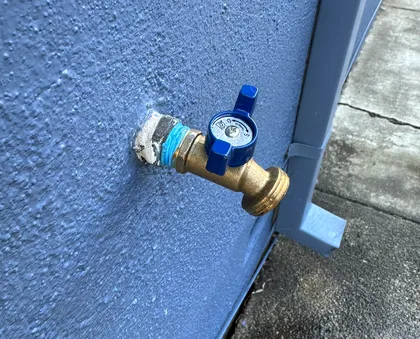
Outdoors is where we see the most failures, and the photo here is the typical
case: a worn rubber-washer hose bib that drips and never quite shuts off,
replaced with a quarter-turn ball-valve faucet. The quarter-turn design has far
less to wear out and actually closes fully, which matters more than it sounds
when the tap is on the far side of the house and nobody notices it weeping.
We also handle fixture upgrades throughout — kitchen and bath faucets, shower
valves, shutoff valves that have seized in the open position, and the supply
connections behind them that are usually the same age as the fixture.