Given where we live, this is one of the more sensible pieces of insurance you
can put on a house, and it’s a short job.
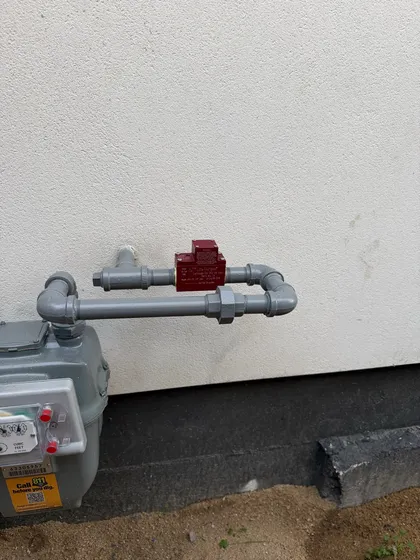
The valve installs on the gas line immediately downstream of the meter. When
shaking exceeds its actuation threshold it closes, cutting supply to the
building. In the minutes after a significant quake, that is the difference
between a damaged line venting gas and a damaged line that isn’t.
The parts that matter in the install are unglamorous. The valve has to be sized
for the actual gas load of the house, not just fitted to whatever pipe diameter
is there. It has to be mounted level and in the correct orientation or it will
not actuate reliably. And it has to be somewhere a person can reach to reset it
— we’ve seen valves fitted behind fixed screening where resetting would mean
dismantling something first.
We pull the permit, size and fit the valve, pressure-test the work, and walk you
through resetting it before we leave. Whether your city requires one is worth
checking locally; the rules differ from jurisdiction to jurisdiction and change
over time.
If you ever smell gas — before, during or after any of this — leave the building
first, then call 911 and PG&E at 1-800-743-5000.